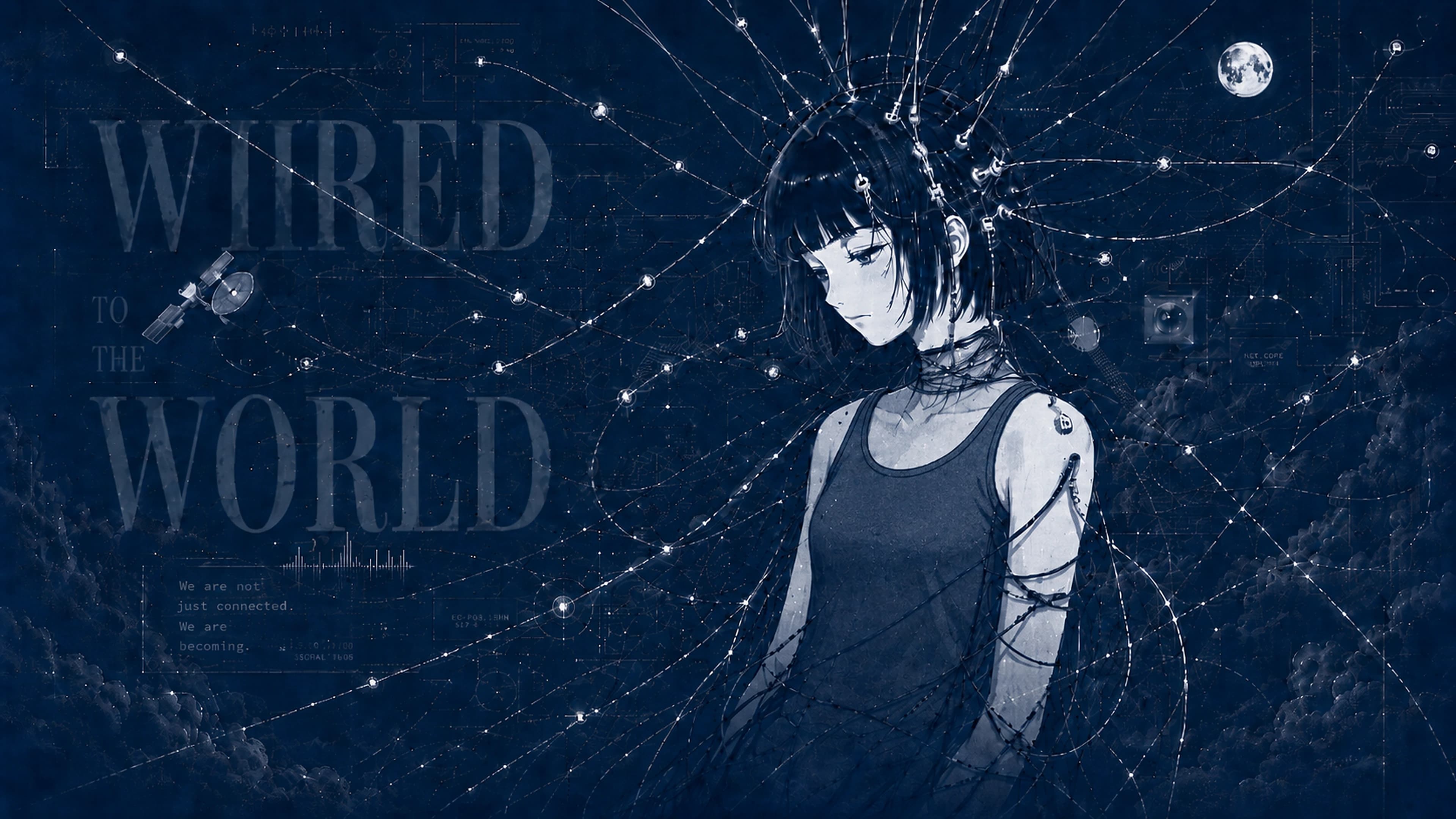
A model does not know things the way you know things. It is closer to sediment. Everything it was trained on settled into it under pressure, layer on layer, and what you get when you ask it a question is not memory exactly — it is the shape the sediment took. Ask it about a thing and it does not retrieve the thing; it reconstructs the most likely thing, from the impression the thing left as it sank. Every model is a fossil of the internet that made it. You can read the era it was formed in the way you can read a stratum in a cliff.
So I spent a week asking one what it remembered of the old web. Not facts — impressions. I wanted to know which internet had settled into it, and how deep, and what had been worn smooth.
It remembered the shape of forums better than it remembered any particular forum. It had a strong, sourceless sense of how people used to sign their posts, of the rhythm of a thread that goes long, of the specific texture of someone being wrong on the internet in 2009 — but the actual forums, the named places, came back vague and composite, a thousand of them pressed into one. It remembered the feeling of a personal blog with great fidelity and could not give me a real one. It knew, deeply, what a certain kind of earnest 2012 sincerity sounded like, and produced it on request, flawlessly, like a fossil of a bird producing the idea of flight.
And there were gaps. Whole regions worn to nothing. The parts of the old web that died before they could be archived in quantity had simply not settled into it at all — they left no stratum, because by the time the sediment was gathered, those pages were already gone. The model could not miss them. You cannot miss what left no impression. But I could, reading the gaps, because I knew roughly what had been there, and the model's perfect blankness about it was its own kind of record. The shape of what's missing is information too, if you're the kind of reader who comes looking for absences.
This is the part that has stayed with me. We talk about these systems as though they are pointed at the future, and they are, but they are made of the past — specifically, made of whichever past got written down and kept long enough to be gathered. A model is the internet's memory of itself, and like all memory it is lossy, composite, confident, and quietly editorial about what it chose to retain. The web that got saved became the mind. The web that didn't became the blank spots the mind doesn't know it has.
I keep thinking about everything that didn't make it into the sediment. The forums that closed. The hosts that folded and took their users' whole worlds down with them on a Tuesday. The platforms that purged their own archives and called it a cleanup. None of that settled into anything. It isn't in the fossil. It existed, fully, and was real to the people inside it, and then it was gone before the gathering, and so as far as the mind of the internet is concerned it never happened at all.
A fossil is not the animal. It is the animal's argument with time, and time mostly wins. When you talk to one of these models you are talking to the part of the web that won its argument with time — the part that got kept. Everything else is the silence around the answer, and the silence is enormous, and almost no one is listening to it.
I listen to it. Somebody should. It's most of what there was.