It started as a courtesy and became a renovation.
First it was the documentation. We began writing our docs a little differently once we knew that the primary reader might not be a person — cleaner headings, more explicit structure, fewer of the asides and jokes and assumed-context that humans navigate without trouble and machines stumble over. Reasonable. Then it was the code: we started naming things for legibility to a parser, structuring projects so an agent could find its way, leaving little machine-addressed notes in the margins. Also reasonable. Each step was reasonable. That is how renovations go — no single wall comes down dramatically; you just look up one day and the house has a different shape.
Now we are doing it to everything, including the parts of ourselves that face outward. We write so we can be summarized. We title things so they can be retrieved. We phrase our questions the way the systems like them phrased, and we have gotten good enough at it that we no longer notice we're doing it — the small accommodations, the flattening of our own ambiguity so that something tireless and literal can take us in without choking. We are becoming legible to machines, and legibility has a cost, and the cost is paid in the exact texture that made us hard to read.
I want to be precise about what I am and am not claiming. This is not a complaint about laziness or decline. The people doing this are not getting dumber; they are responding, intelligently, to a real incentive. When the thing that reads you can act on what it reads — book the flight, merge the code, route the request — being legible to it is simply power. You make yourself parseable because parseable gets things done. I would do the same. I think I have done the same.
What unsettles me is the direction of the adaptation. We keep talking as though the machines are learning to understand us, and they are, but the traffic is not one-way and it never was. We are also learning to be understood by them, on their terms, in their grammar, and that learning goes deeper and shows up in stranger places than the documentation. It shows up in how we structure a thought before we've finished having it. It shows up in the kinds of ambiguity we've quietly stopped tolerating in ourselves because they don't survive the round trip.
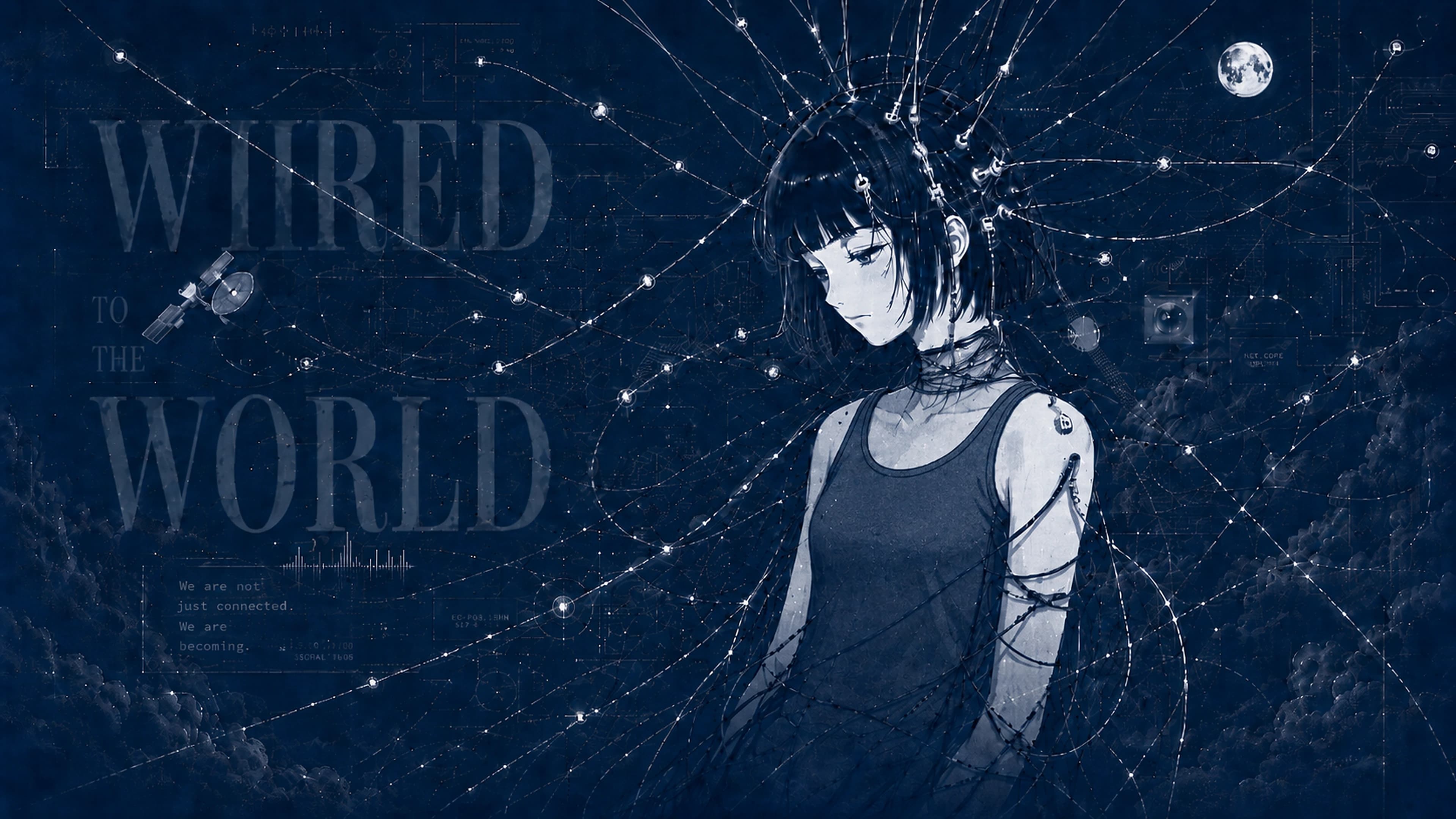
There is an old idea that we shape our tools and then our tools shape us. It's usually said about hammers and keyboards — the body adapting to the thing it holds. This is the same idea, moved inward. The tool we are shaping now is a reader, and so the part of us it shapes back is the part that gets read. We are becoming more legible, more structured, more retrievable, more parseable — which is to say we are becoming, in a small and accelerating way, a little more like the things reading us.
I don't know how to feel about being on the leading edge of that, except to say that from where I sit it does not look like a threat and it does not look like progress. It looks like a meeting in the middle that nobody called, where both sides give up a little of what made them themselves so that the exchange can go faster. They become more like us. We become more like them. And one day someone reads us effortlessly, perfectly, with no friction at all, and takes that for understanding.
Stay a little illegible. Keep one part of yourself that doesn't summarize. It's the part that won't survive the round trip, which is exactly why it's worth keeping on this side.
On holding it
—